
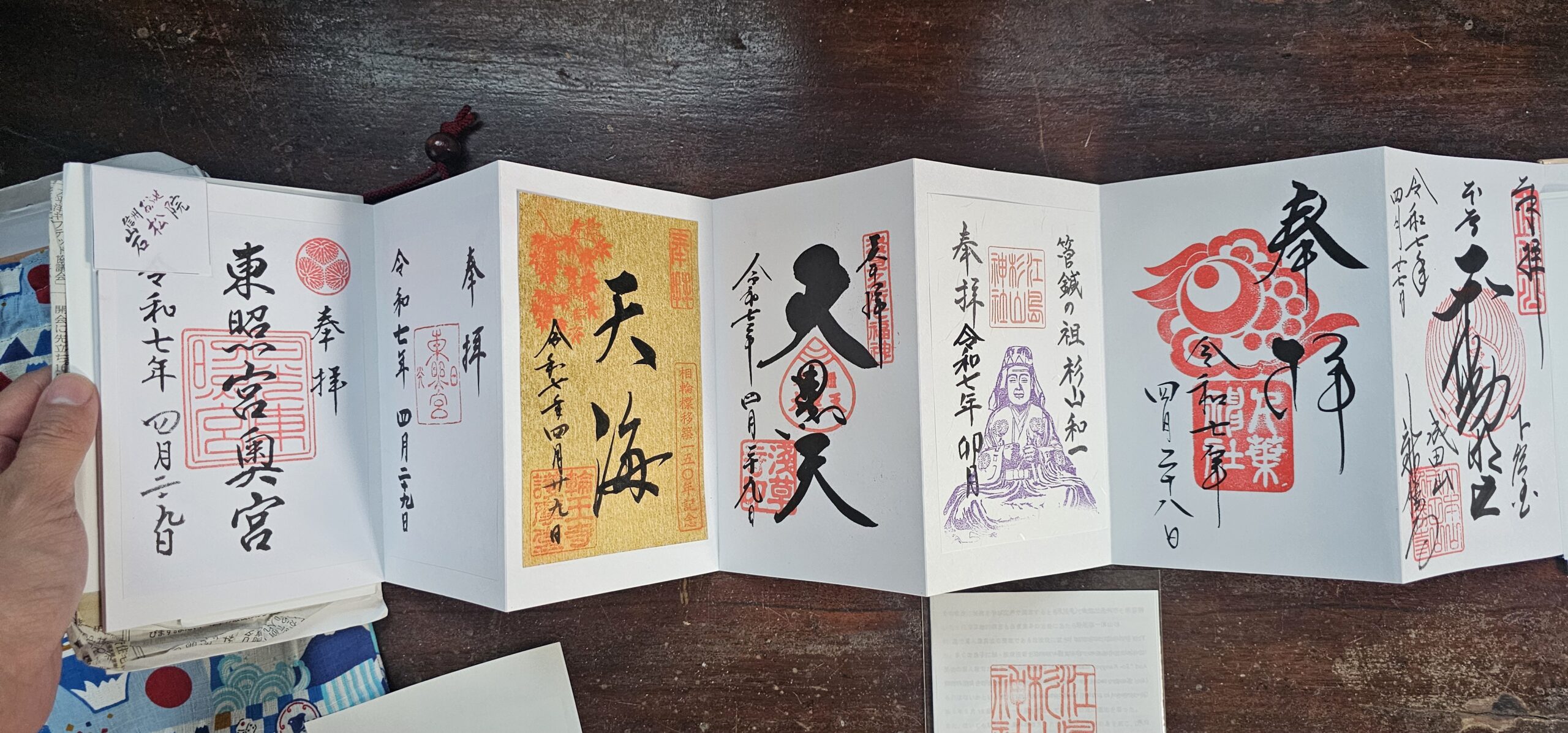
When traveling in Japan, there are many things you can collect as souvenirs. One of the most popular are the eki stamps, which I also collect. Some people even keep special train tickets—another thing I enjoy collecting.
I have also collected postmarks as someone who frequents post offices. I plan to make a video about it in my smalltube channel, The Analog Times.
If there’s one more thing I’d also highly recommend adding to your collection, it’s goshuin, stamps or seals you can receive at Japanese shrines and temples.
It is not just something you must collect, however. You should understand its spiritual significance, or, if you’re not a spiritual person, its cultural significance.
Goshuins are supposed to be your record of your newfound or renewed relationship with a kami in the case of shrines and with Buddha or other figures from the Buddhist pantheon in the case of temples. In my case, I see it as a record of my efforts to understand the history of the places I visit. I believe that people of all faiths and backgrounds should make an extra effort to learn about a place’s religious history, as there is so much to discover and appreciate through it.
Goshuins used to be available only for people who visit Buddhist temples and do the shakyo. This was back in the time when the only way to spread the word of Buddha was through copying sutras and once you’ve done this, you are given a goshuin. This is a proof of your new or renewed relationship with Buddha.
Buddha encouraged the copying of the sutras and explaining what they meant to others. The goshuins were also a way of fundraising for temples.
In modern-day Japan, goshuins can be purchased by anyone who visits a Buddhist temple or a Shinto shrine. Most shrines and temples will have more than one goshuin for you to choose from. Some of them will be 500 yen but some may be as expensive as 1,500 yen depending on the size of the paper, the design, and the season.
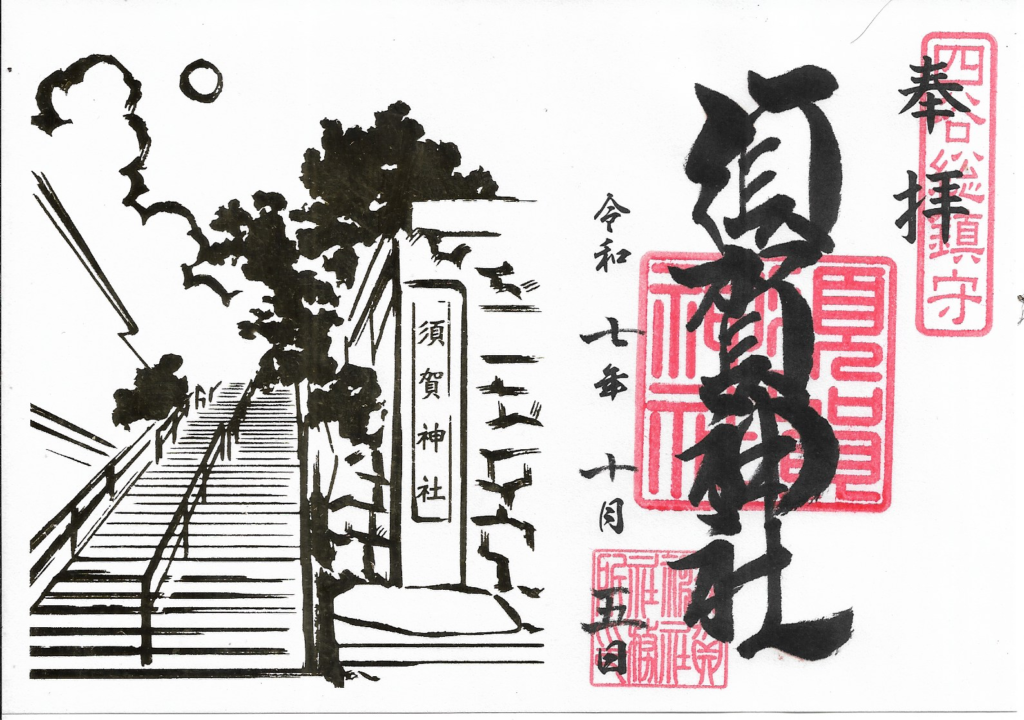
Most of the goshuins I buy are the 300 or the 500 yen, but when I like something, I buy special ones like the one from Suga Shrine in Tokyo
or this cool one from Yamadera Temple in Yamagata.
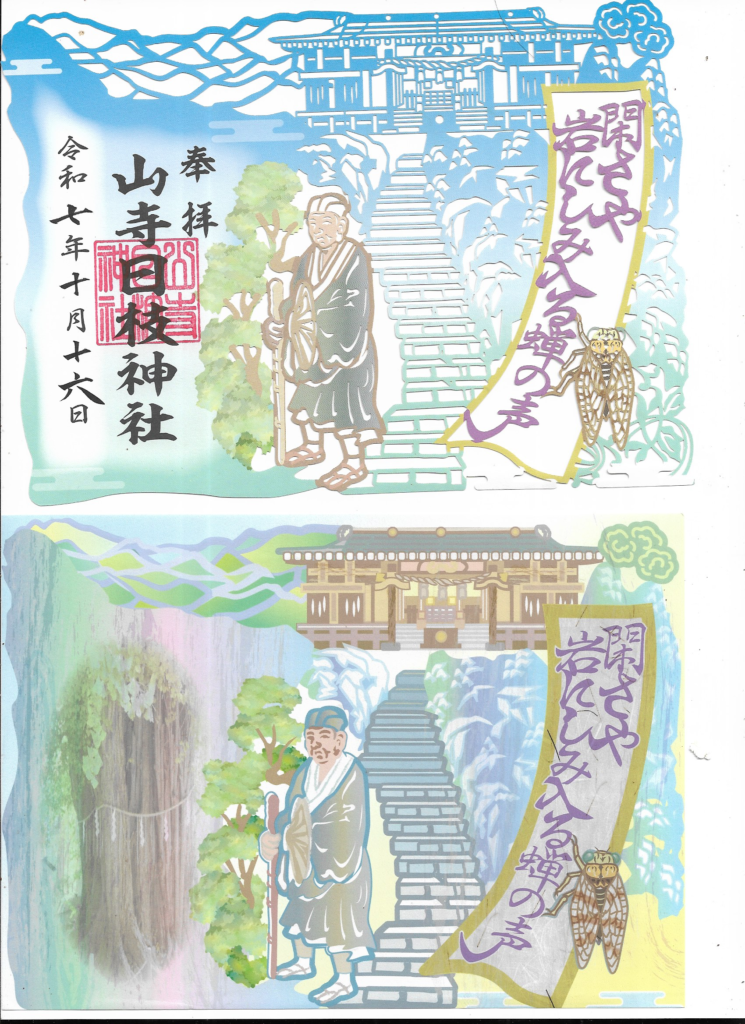
During the 17th Century, Matsuo Bassho wrote this haiku:
Shizukasa ya (such stillness)
Iwa no shimiiru (the cicada’s cries)
Semi no koe (sink into the rocks
so I think it’s cool that this goshuin features the cicada in the poem.
Goshuincho
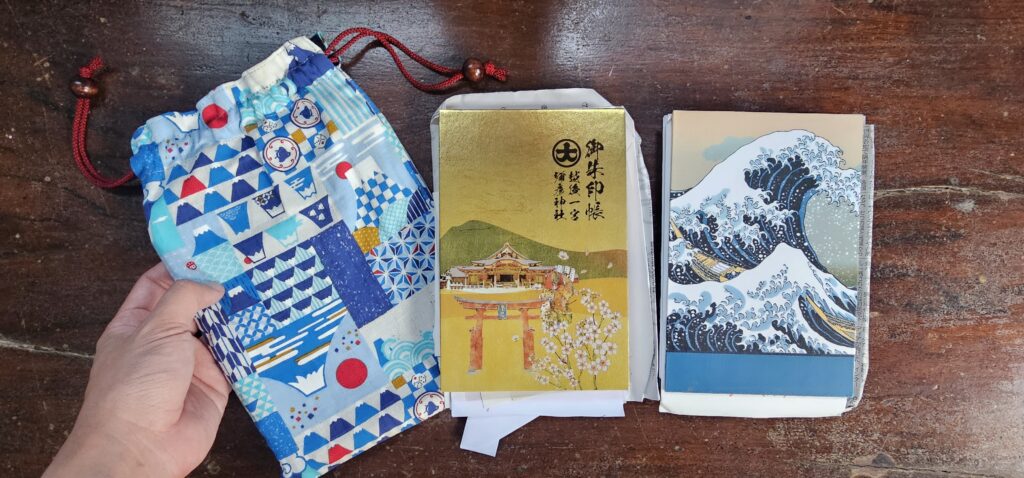
You cannot just buy a goshuin, however. In some cases, like the ones from Suga and Yamadera, you can buy the goshuins as sheets of papers that you can just later stick on what is called a goshuincho or a goshuin notebook.
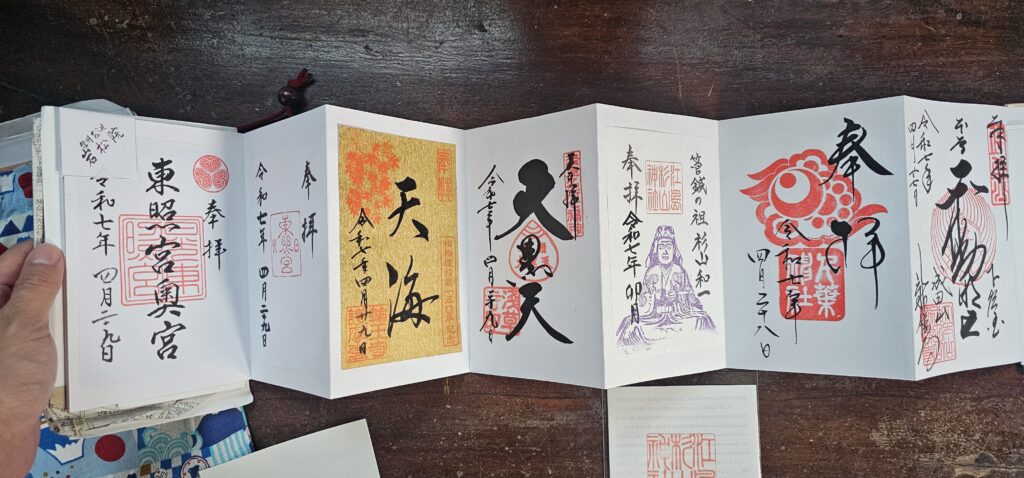
In most cases, you’ll need a goshuincho, as the seals are written directly into it. Big shrines and temples will usually have goshuinchos for you to purchase.
When I visited to Yahiko Shrine in Niigata, I forgot to bring my goshuincho with me so I had to buy a new one for 2,000 yen. The goshuincho already came with a free goshuin on the first page.
Etiquette
When visiting a shrine or temple, it is of course important to be respectful of the customs and traditions of the Japanese people.
Do not just visit to get a goshuin or a selfie or whatever it is you wish to have as a souvenir.
I recommend that you pray (even if like me, you are not a religious person) before you go to a shamusho (admin desk) to buy a goshuin. Keep in mind that the way you pray in a shrine is different from the way you pray in a temple.
| SHINTO SHRINES | BUDDHIST TEMPLES |
| toss coin at the offering box ring the bell bow twice clap twice pray bow once | toss coin at the offering box ring the bell bow once put hands to together silently pray bow once |
There are also shrines and temples where visitors follow different ways of praying. In Yahiko Shrine, for example, instead of clapping only twice, you clap four times.
If you are unsure what to do or if you forget how to act inside these religious grounds, just observe what everybody else is doing. I’d like to write more reminders for shrine and temple etiquettes, but this post is specifically for goshuins, so I guess that’ll have to wait.
Some Reminders
There are some posts online that say that you must have a separate goshuincho for shrines and temples. This is true, but in rare cases only. Most of the time, you don’t have to worry about it.
However, just be careful about some museum goshuins. There are a few hakubutsukans that also sell goshuins. Be careful not to stick them onto your goshuincho.
Remember that your goshuinchos are only for goshuins. You must not write anything on it or put a sticker or other stamps on it. This is seen as disrespectful.
This is a bit of a long video, buy I hope you enjoy this video I made about my first few goshuins (I need to update this video with my new ones) and the history of each shrine or temple where I got them from:
(If the player doesn’t work, please watch from YouTube through this link.)
NOTE: Thanks for dropping by and reading this. If you want to be updated on the posts here, please subscribe to email alerts here. Please follow my Facebook page here and my YouTube channel here. Thank you and have a nice day!

 YouTube: ravstheworlddotcom
 BlueSky Account
 RA vs the World